OpenRGB's plugin system allows for limitless functionality


OpenRGB provides an expansive plugin interface allowing a wide variety of additional functionality to be added by plugins. Plugins can add additional functionality to the OpenRGB user interface and take control of your OpenRGB devices to provide synchronized effects, use your RGB devices as indicator lights for hardware statistics, integrate with third party lighting control software, schedule OpenRGB lighting profile changes, and more.


OpenRGB Effects Plugin

Synchronize your setup with amazing effects

OpenRGB Effects Plugin

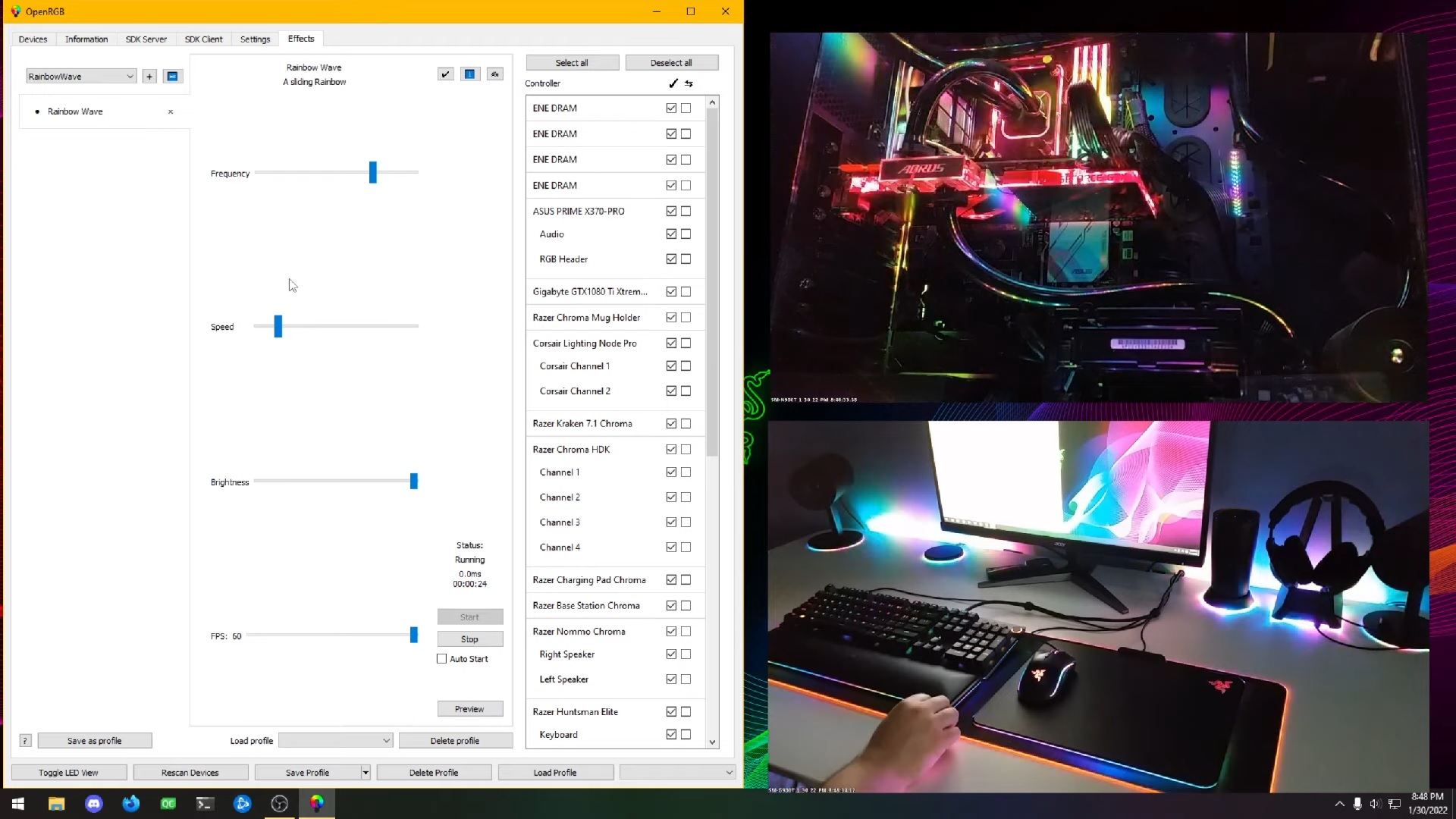
The OpenRGB Effects Plugin provides an extensive list of custom effects that can be synchronized across all devices that support Direct Mode. Many standard effects are available such as Rainbow, Visor, Breathing, and more. Advanced effects include several audio visualizations, Ambilight, GIF player, and a Shader renderer for using GLSL shaders as RGB effects.

More Info and Releases
OpenRGB Visual Map Plugin

Lay out your devices however you like

OpenRGB Visual Map Plugin

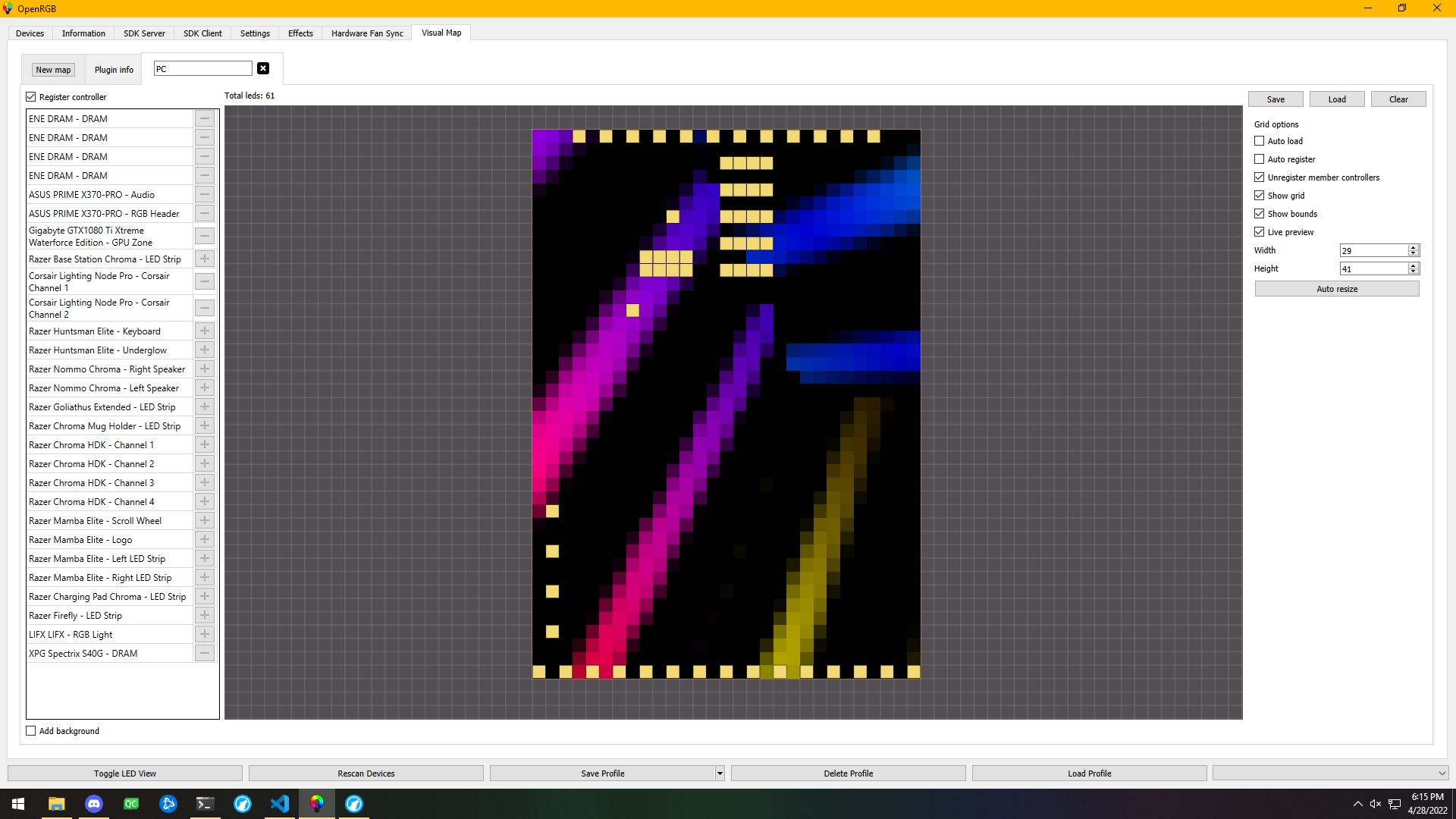
Normally, OpenRGB effects engines apply patterns one device at a time. With the Visual Map Plugin, you can combine one or more devices into a custom grid, allowing incredible effects to shine across your entire setup as one unified display.

More Info and Releases
OpenRGB Hardware Sync Plugin

Visualize system statistics with RGB

OpenRGB Hardware Sync Plugin

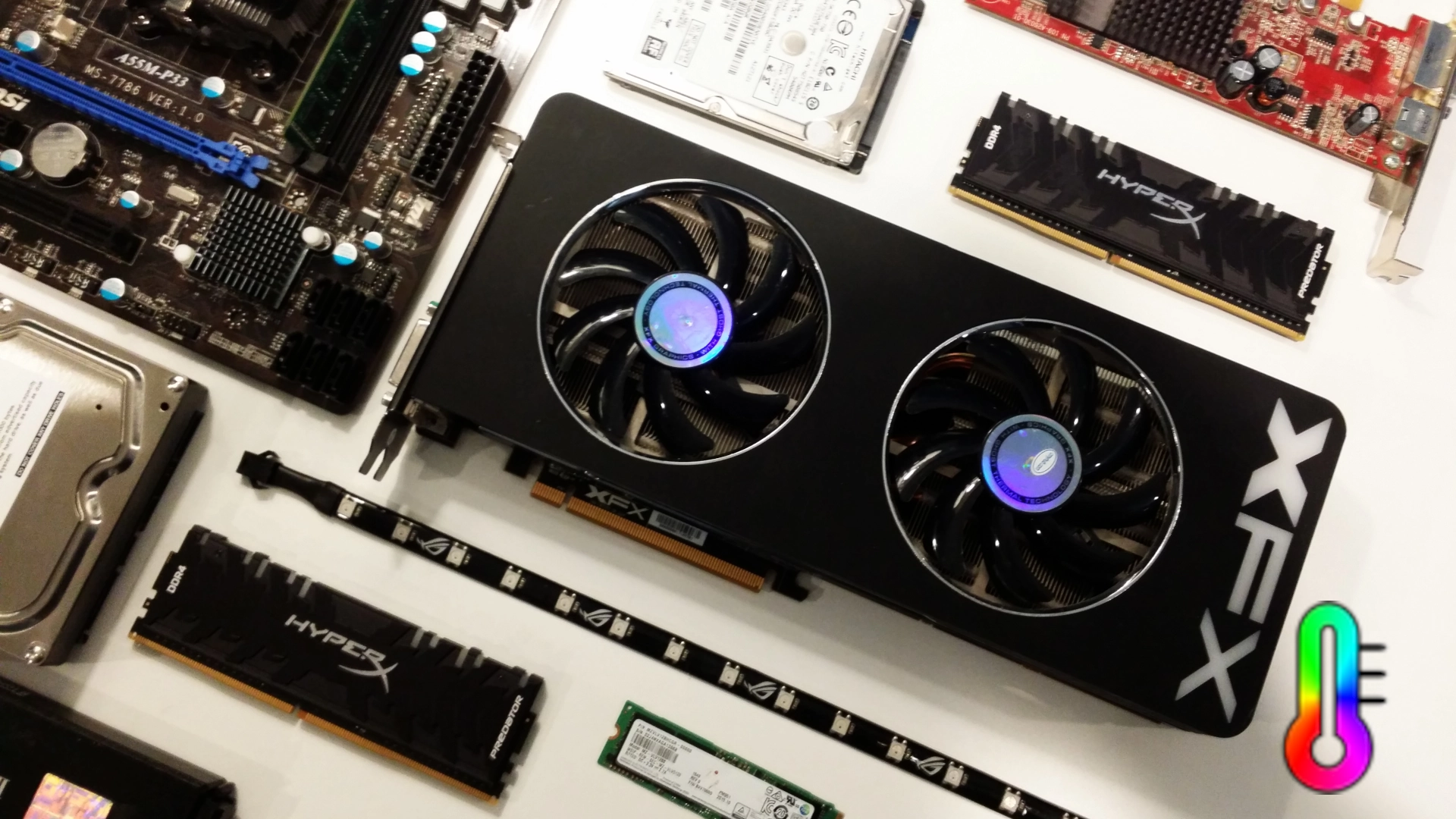
Want to keep an eye on your CPU and GPU temperatures while you're in game? The Hardware Sync Plugin will let you know if your temperatures are too high by changing the color of your RGB. Many more system parameters are supported as well, and multiple devices can indicate multiple measurements.

More Info and Releases
OpenRGB Fan Sync Plugin

Integrate fan control into OpenRGB

OpenRGB Fan Sync Plugin

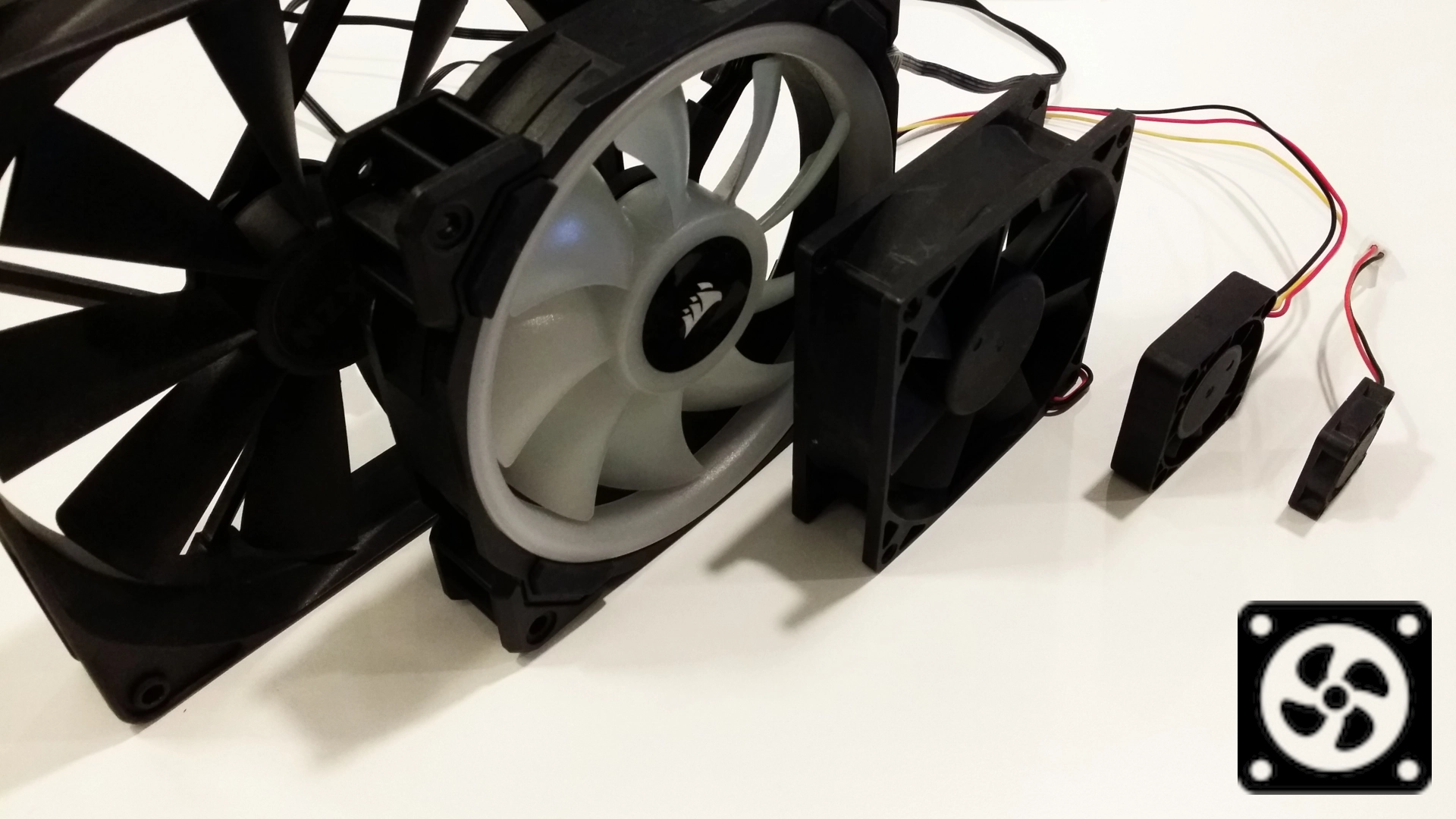
Controlling all your RGB in one place is great, but what about your fan speeds? The Fan Sync Plugin takes care of that. Using the same backend as the Hardware Sync Plugin, the Fan Sync Plugin lets you map one or more system parameters to control fan speeds, including custom fan curves.

More Info and Releases

Sufjan Stevens - Mystery Of Love (audio) May 2026

: The opening line, "Oh, to see without my eyes," emphasizes a sensory connection that goes beyond the physical. According to OUPblog , this highlights the communicative power of touch and how intimacy creates its own reality.

Watch these performances and analyses to further explore the song's emotional depth:

: Stevens uses birds, like the "plover" and "blackbird," as symbols of "absolute freedom". In an interview with Deadline , he explains that birds are "divine creatures" because they can escape gravity and ascend toward the heavens, representing the human desire for transcendence. Sufjan Stevens - Mystery of Love (Audio)

Sufjan Stevens “Mystery of Love (Demo)” (Official Music Video) YouTube · Sufjan Stevens Sufjan Stevens - Mystery of Love YouTube · Sufjan Stevens - Topic

Sufjan Stevens' is a meditative exploration of the "first love" experience—capturing its ephemeral beauty, its spiritual elevation, and the inevitable sorrow of its loss. Originally written for his 2015 album Carrie & Lowell but made famous by the 2017 film Call Me by Your Name , the song uses personal and mythological symbolism to describe love as a transcendent, yet devastating force. Core Themes and Analysis : The opening line, "Oh, to see without

: Stevens frames love as a religious experience. Phrases like "Hand of God deliver me" and "Blessed be the mystery of love" suggest that human connection is a gateway to the sacred. Reviewers from UrbanDaddy note that the song exalts romantic feelings to a divine realm.

: By referencing the ancient Greek lovers Hephaestion and Alexander the Great, Stevens grounds the song in a history of tragic, deep-seated devotion. In an interview with Deadline , he explains

: The chorus shifts from "The first time that you touched me" to "The last time," mirroring how bliss eventually gives way to a "gnawing emptiness" once the relationship ends. Symbolism and References